Logohu në mjekët.al

Ectopic pregnancy
Sent by
Dr. Ilda Ndreko
It's a time when anyone who doesn't have a smartphone in hand is different from the others, whoever doesn't know how to use social networks is considered 'outdated', everyone on social networks, children, teenagers, students, adults, even the elderly. Everyone has a reason for using it, some for fun, some for work, and so on...
read full article
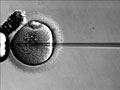
History and development of the ICSI technique
Sent by
Dr. Marsel Haxhia
Since the birth of Louise Brown in June 1978, IVF has been proven to be an effective treatment for infertility due to the female factor, especially tubal infertility (Edwards et al., 1980). In subsequent years, IVF was also successfully used in couples with unexplained infertility, with infertilit...
read full article
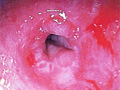
Gastroesophageal Reflux
Sent by
Dr. Shk. Albana Duni
Gastroesophageal reflux disease is the most common disease of the esophagus and has to do with the return of stomach secretions to the esophagus. This return occurs as a consequence of the loss of tone of the lower gastroesophageal sphincter, which is located precisely at the junction of the esophagus with the stomach. This sphincter plays the role o...
read full article
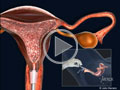
Hysterosalpingography
Sent by
Dr. Elton Peci
For a sperm to fertilize the egg, the female genital tract must be permeable throughout its entire length. Any defect that damages the permeability of this canal starting from the lower floor (cervix, uterus) to the upper floor of this apparatus causes infertility or ectopic pregnancy...
read full article

Male Infertility
Sent by
Dr. Elton Peci
The problems that cause infertility in males are very common. Male infertility accounts for 25-50% of infertility cases.
The problems that can cause male infertility can be divided into two major groups: problems that affect sperm production by the testicles and problem...
read full article
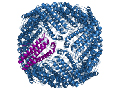
Hyperferritinemia
Sent by
Dr. Shk. Sotiraq Lako
I often write about the absence of Iron (absolute) identified with Hypoferritinemia, which is actually the biggest medical deficit and the most worsened, undervalued, and mistreated medical problem (everyone tries, but with nearly 100% failure). But today, I will write about the opposite, Hyperferritinemia, the increase in the level of ferritin in the blood...
read full article
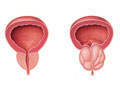
Enlargement of the Prostate
Sent by
Dr. Shk. Rezar Rusi
The enlargement of the Benign Prostate, also known as Benign Prostatic Hyperplasia (BPH), is a common condition in men over 50 years old that increases with age. It can cause difficulties during the urination process. If the enlarged prostate is not treated, it can create difficulties i...
read full article
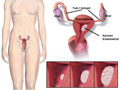
Endometrial cancer
Sent by
Dr. Elton Peci
Endometrial cancer is what in everyday language is also called uterine cancer (although this last term is not used by doctors). The endometrium is the layer that lines the cavity (the womb's cavity). Endometrial cancer occurs when endometrial cells begin to grow in an uncontrolled and chaotic manner...
read full article

Amenorrhea
Sent by
Dr. Ilda Ndreko
Amenorrhea is the absence of 3 (three) or more menstrual cycles (90 days or more). Amenorrhea is a normal sign in prepuberty, in pregnant women, and in postmenopause. In women of reproductive age, a pregnancy is initially ruled out, and in its absence, an evaluation of a possible cause is made...
read full article
Clinical consequences of iron deficiency
Sent by
Dr. Shk. Sotiraq Lako
Iron deficiency is the most common case of deficiency (lack, deficiency) of a chemical element, worldwide. It is economically important because it reduces the ability of individuals to cope with physical work and reduces both growth and learning in children...
read full article