Logohu në mjekët.al
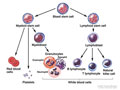
Leukemia
Sent by
Dr. Shk. Sotiraq Lako
Leukemia (leucemia, leukosis) represents a heterogeneous group of malignant tumors (neoplasms), with varying degrees of proliferation, differentiation, and cellular maturation, originating from the precursor cells of the blood's formed elements in the Bone Marrow (BM). Leukemia is classified among the "liquid" tumors and differ...
read full article
Ovarian Cysts
Sent by
Dr. Kozeta Mustafaraj
Cysts are sacs filled with fluid inside or on the surface of the ovary. A woman has 2 ovaries, each of them the size and shape of an almond, located on each side of the uterus. The egg cell develops and matures in the ovary and is released every month in a cyclic manner during the reproductive life...
read full article
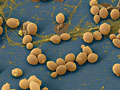
Vaginal fungi
Sent by
Dr. Jonida Reveli
Yeast is an organism that normally lives in the vaginal mucosa in small amounts. Vaginal yeast infection occurs when the number of fungal yeast cells that grow in the vagina increases. At least 75% of women experience at least one episode of vaginal yeast infection during their lifetime. Although it is an infection that causes discomfor...
read full article
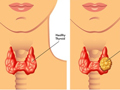
Thyroid tumors
Sent by
Dr. Riselda Tahiraj
Thyroid Carcinomas (TC) are rare (3.6% of all human tumors) but are the most common endocrine malignancies. Their incidence has increased in recent decades, attributed to the detection of carcinomas < 1cm through the use of neck ultrasound. The male-to-female ratio is 4/1. The average age at diagnosis is...
read full article
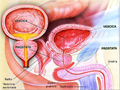
Benign prostatic hyperplasia
Sent by
Dr. Viktor QERESHNIKU
The prostate is a gland of the male sexual apparatus located below the urinary bladder and in front of the rectum. Traditionally, the prostate gland presents 4 lobes, but more often the subdivision according to McNeal is used, which states that the prostate consists of: Peripheral zone that constitutes about 70% of the prostate tissu...
read full article
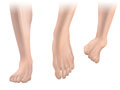
Clubfoot - Twisted foot or Pes equinovarus
Sent by
Dr. Ledian Fezollari
Parents now immediately know if their newborn has a clubfoot. Some know even before the child is born, if an ultrasound is done during pregnancy after week 16. A clubfoot occurs in approximately one in every 1,000 births, slightly more often in boys than in girls...
read full article
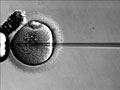
History and development of the ICSI technique
Sent by
Dr. Marsel Haxhia
Since the birth of Louise Brown in June 1978, IVF has been proven to be an effective treatment for infertility due to the female factor, especially tubal infertility (Edwards et al., 1980). In subsequent years, IVF was also successfully used in couples with unexplained infertility, with infertilit...
read full article

Dermato-aesthetic treatments
Sent by
Dr. Ardiana Sinani
Every morning we need to stand in front of the mirror and there we look at our image and always say: ah if only I didn't have this wrinkle, eh if only these wrinkles beside the nose were more filled. We start pulling the skin of our face with our hands and look more beautiful, but as soon as we remove our hands we return to the previous state...
read full article

Autologous plasma therapy
Sent by
Dr. Ardiana Sinani
Since ancient times, people have used blood as their food, and then from mythology or various beliefs it has been believed that drinking blood would help the body to regenerate, heal from various diseases or even rejuvenate. The use of blood as medical therapy b...
read full article

Extended pregnancy
Sent by
Dr. Ilda Ndreko
Extended pregnancy or post-term is defined as a pregnancy that lasts more than 42 weeks or 294 days, starting from the first day of the last cycle in a woman who has a regular menstrual cycle. When we have the first day of the last uncertain, irregular menstruation, a woman who uses oral contraceptives or who has bleedin...
read full article